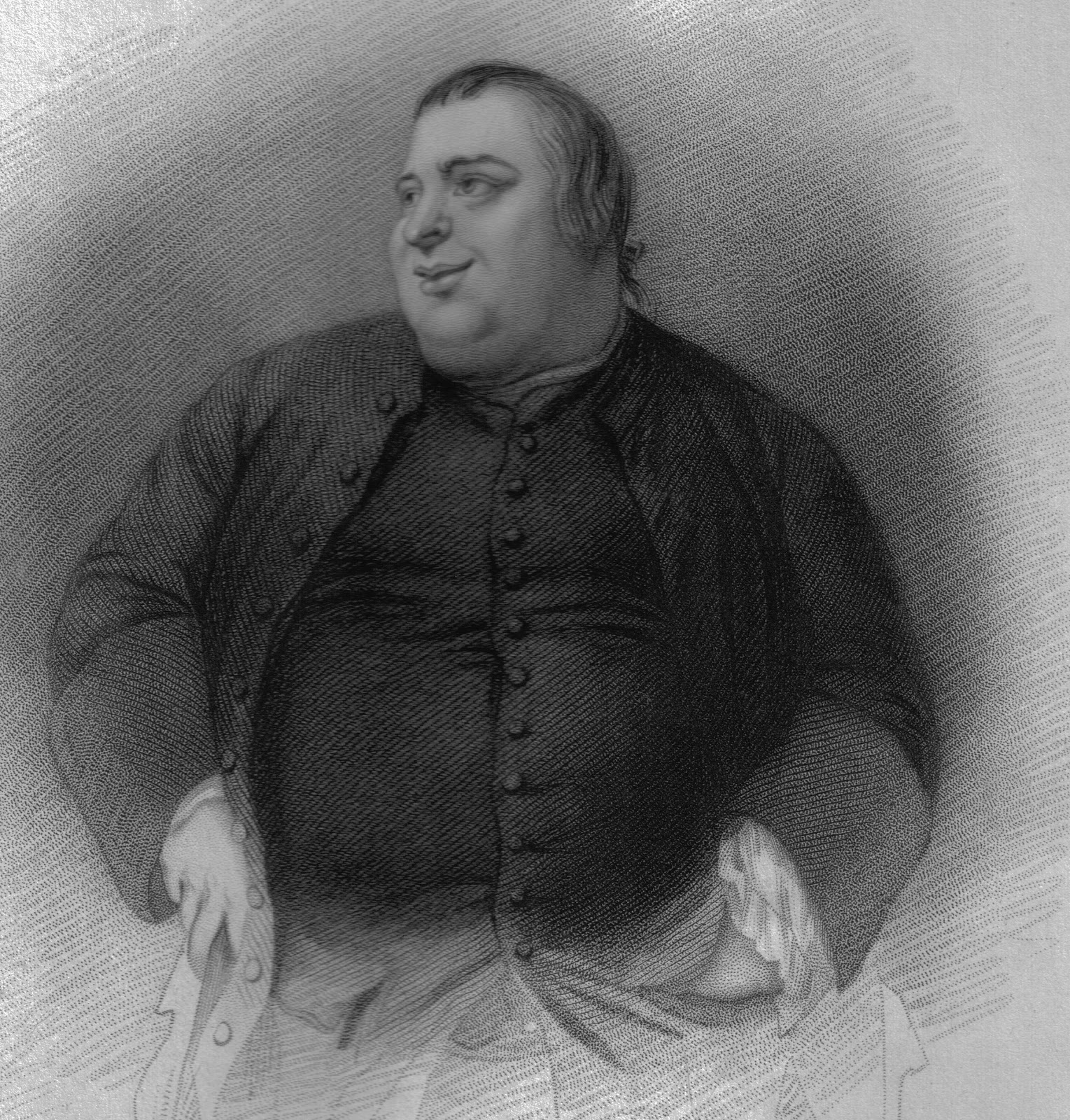
Robinson Crusoe Quote

"He preferred, however, "gourmandization," was an idolater of a certain decent, commodious fish, called a turtle, and worshipped the culinary image wherever he nozed it put up."
---The Contradiction (1796)

Wednesday, 7 November 2012

Confessions of an English Turtle-Eater

In 1755, the weekly periodical The World published an “insider’s account” of an English turtle-feast.[1]  To call it unflattering would be an understatement; the piece viciously satirized the gastronomic obsession that had suddenly afflicted high society.

The World only ran for a few years, yet the two penny periodical reputedly had a high circulation.  Much of the content involved some sort of playful social critique intertwined with a moral lesson; the editor, Adam Fitz-Adam, attempted to be “witty when I can, and instructive when I dare.”[2]  Readers most likely would have treated the piece as entertainment more so than as investigative journalism.  But when there’s smoke, there’s fire; after all, separating fact and fiction was a far more ambiguous enterprise in those days.

What went down at a metropolitan turtle feast?  If you will remember from a few posts ago, back in 1744, when Lord Admiral George Anson’s scurvy ridden crew lay stranded off the coast of Panama, sharing fresh-caught turtle was described in glowing terms.  The meat was abundant and readily shared among all ranks of the crew.  Even the superstitious Spanish prisoners were encouraged to give it a try.  Sharing food together –– done with cheerful, convivial swagger –– turned a distant tropical island into a home away from home.  Ah yes.  The good old days. 

By 1755, the party was over.  Or more accurately, turtle feasting had degenerated into an exclusive libertine bacchanal replete with fetishistic rites and rituals.  The uninitiated narrator watches the host of the turtle-feast carefully fold his turtle clothes around his body “like a nightgown,” alluding to the loose fitting Roman attire of Apicius’s day.[3]  Forks and knives are substituted for customized cutlery inventions –– “fine saws, chisels and instruments of different contrivance, as would have made a figure in the apparatus of an anatomist” –– designed to scrape the calipash dry.[4]  Finally, the turtles are treated more like sacrificial victims than food.  Turtle-shells –– “trophies of his luxury” –– adorn the gates of the host’s house.  Six turtles swim around a giant cistern erected in one of the rooms.  But instead of seaweed or algae, these naturally vegetarian creatures fatten in England on a leg of mutton per day.
The craze for "new foods" might have
started with Apicius: the 1st century
Roman foodie
There was certainly something a little cannibalistic about maintaining a sea turtle in England, but actually eating one, as we soon find out, turns men into figurative beasts.  “The plunderers were sensible to no call but their own appetites,” the narrator observes; they ate with “eagerness” and “rapacity,” trying to stuff their faces with the best parts before the rest of the company could get to them.  The formerly gracious host, meanwhile, has “taken care of nobody but himself.”[5]

The more brutish the men appear, the more we as readers are invited to sympathize with the plight of the poor turtle.  For example, the young initiate recoils in shock when he first glimpses the enormous turtle lying in the kitchen, still alive despite having been “cut and two full twenty hours.”  Things go from bad to worse when a “jolly negro wench” appears out of nowhere and callously sprinkles a handful of salt over its body, provoking “such violent convulsions, that [the narrator] was no longer able to look upon a scene of so much horror and ran shuddering out of the kitchen.”  We learn that hundreds of innocent turtles are violently killed during the arduous reptilian middle passage from the West Indies, their shells dashed against one another during storms.  It’s hard to see the turtle’s plight as disconnected from the slave’s.[6]

What should we make of this literary representation of turtle feasting?  In my opinion, mid-century obsessions with turtle feasts underscored widespread cultural anxieties about foodism.  They warn us that knowledge and appreciation of fine food does not prime people to appreciate the finer things in life.  Instead, all notions of civility go out the window.

In fact, turtle eating was often talked about as if it were an addiction.  After a bad day in the stock market, one fictional stockbroker finds temporary solace in a turtle seasoned with cayenne pepper, which “operated so strongly, that his heart was dilated, his spirits were exhilarated…”[7] It's likened to a mind-altering substance rather than a meal.  When it came to the turtle overdoses, satirists had a field day.  In George Lyttleton’s Dialogues of the Dead, an historical foodie Charles Darteneuf fantasizes about coming back to life simply to taste green turtle fat, pledging “to kill myself by the Quantity of it I would eat before the next morning.”[8] 

According to his friend Alexander Pope,
Darteneuf's or "Darty's" favorite food was ham pie
Delicious!   
Eating turtle effectively turns back the clock on the civilizing process, but it also called into question what counted as food.  Now, during the 18th century, the jury was out when it came to the exact flavor of turtle.  Some argued that it tasted like beef; others posited that it the flavor was closer to veal or lobster.[9]  Still others found it utterly disgusting. 

If turtle became so popular, why not alligator?
Where did the madness end?
Rowlandson, "Sir Joseph Banks about to eat an Alligator, or the Fish Supper"(1788)
But if turtle wasn’t universally accepted as food, its skyrocketing popularity raised some red flags.  Turtle was more than just an acquired taste imported from abroad; it opened up a Pandora’s box full of limitless gastronomic possibilities that threatened to destroy the bonds of a common culture.  No longer were men satisfied with the roast beef of old England at their feasts; in the sea turtle, nativists suspected a “conspiracy of Creolian epicures to banish [roast beef] from the island.”[10]  And if sea turtle could so easily become a culinary rage, who was to say that the English palate couldn’t be reconciled to an alligator?  How could tradition survive within a relentless quest for novelty?

With all this bad press, turtle risked losing its status as a delicacy.


[1] If you’d like to read it yourself, the article is called “A Humourous Account of a Turtle Feast and a Turtle Eater,” in The World 123, May 8, 1755.
[2] Fore more on The World, see Patricia Demers "Sir Edward Moore" Oxford Dictionary of National Biography, online edn, Jan 2008. 
[3] Apicius was the Roman bon-vivant who lived in the 1st century BC.  In 1705 F.R.S. and antiquarian Martin Lister edited and privately printed a cookbook supposedly authored by him, sparking off vigorous debates among intellectuals about what kinds of foods Britons should be eating.  His name became associated with insatiable gluttony and love of luxury during the 18th century.   
[4] Did “turtle clothes” actually exist?  I have yet to find any evidence of real turtle eating uniform.  Most likely this simply meant loose-fitting clothes.  The only other reference I have found comes from “A Scene of Shades” published in the General Evening Post, October 11, 1770.  This article tells the story of fictional “Common Councilman Guzzledown” who announces “because I knew there was to be a great deal of turtle, I put on my light drab frock and gold-laced scarlet waistcoat that laces down the back.” If you are a textile historian with any knowledge of 18th century turtle-clothes, please get in touch!  
[5] This account isn't the only turtle-feast to turn men into ravaging monsters with no sense of hospitality.  In 1770, a disappointed guest at a corporation dinner wrote an angry letter to the General Evening Post, reporting that entire tables received only empty platters and empty turtle shells because the people served first had eaten it all.  
[6] I’ve always wondered if there is a critique of the slave trade hidden in this indictment of turtle feasting.  Fitz-Adam reconstructs a topsy-turvy world where reptiles seem more human than men.  And after all, it’s hard to deny that the turtle’s body seems to symbolize a failed economic and moral system associated with the West Indies.  In 1755, these kind of critiques were ahead of their time.
[7] John Hall Stevenson, Yorick's Sentimental Journey, continued vol 2, (London, 1774) 27.
[8] George Lyttelton, Dialogues of the Dead (London, 1760).  Darteneuf actually existed; he was a member of the Kit Kat club and died before turtle-eating had penetrated Great Britain.  You can find out more about him in Philip Carter's article "Charles Dartiquenave," Oxford Dictionary of Nationanl Biography, online edn, Jan, 2008.  
[9]  The only reference to turtle's resemblance to veal and lobster comes from James McWilliam's A Revolution in Eating (New York: Columbia University Press, 2005) who references Richard Bradley, a gentleman traveling in Barbados during the 18th century and found it "extremely pleasant either roasted or baked."  Many contemporaries believed that turtle tasted fresher and better in the West Indies.  
[10]  Adam Fitz-Adam, The World, June 5, 1755, 115-120.


Monday, 29 October 2012

Turtle Mania

In my last post, I traced the culinary transformation of the sea turtle: from sailor’s scurvy-fighting aid into high society’s chicest luxury food.  But this does not explain why the British obsession with turtle spread over the 1750s and 1760s.  “A Turtle-feast is equally relished at both Ends of the Town,” a satirist observed in 1756; the mere invitation was understood as a gateway to power and prestige.  Rumors abounded of clandestine turtle-orgies, where overzealous eaters would gorge themselves to the death.  Why did the sea turtle become the 18th century’s greatest culinary sensation?
A local politician does
the post-turtle-feast "walk of shame" c 1770
Let’s count the ways. 

The turtle eaters' capture
of this Spanish Galleon
 was a national triumph
First, Britons regarded turtle as a quasi-patriotic treat, as it testified to the limitless possibilities offered by the expanding Empire.[i]  No longer need connoisseurs rely on cullises, puptons and frivolous little “kickshaws” prepared by overpaid French cooks.  In the Englishman’s eyes, dainty, over-seasoned fare of this sort could barely sustain a weak-chested woman.  Turtle, by contrast, was a hearty and masculine repast that got the job done.  One thirty-pound turtle, so the cookbooks claimed, could create five to six different dishes and feed a large family.  Others were rumored to feed 100 men.[ii]  It was the epitome of head-to-tail cooking.

Well … easier said than done.  When it came to cooking a turtle, England had no pre-established culinary traditions.  Contemporary recipes –– which are about 3x lengthier than those regarding other large haunches of meat –– make clear that turtle-cookery was no easy feat.  And even then, as the gentlemen of White’s Chocolate House discovered, the oven just might not be big enough. 

But therein laid the appeal; turtle-eating catered to a love of novelty, fashion and exoticism so intrinsic to 18th century consumer behavior.[iii]  It also engendered a new language of culinary expertise; one must distinguish the “calipash” –– the large upper shell that took longer to cook –– from the “calipee,” or the bottom shell. And every true connoisseur knew that the turtle’s green fat –– described as having the “consistence of butter” –– was the tastiest part.[iv]  By the 19th century, cookery writers had established rigid aesthetic guidelines for serving turtle.[v]  Small wonder that one so rarely reads about turtle dinners: only of turtle feasts.  

By 1770, turtle was a permanent fixture in the British cookery book.  But as I rifled through a sampling of contemporary cookbooks, I found that the recipes listed were nearly identical, copied word for word.  Was it possible that the cookbook authors simply plagiarized each other’s recipes … without ever tinkering around with the dish themselves?  I suspected there was a good chance that many cookery authors never even tasted turtle; its astronomical price tag –– commanding as much as 4 shillings and 6 pence a pound –– suggests that the English cultural imagination profited from turtle meat more than the English stomach.  It was not uncommon to see auction notices and “wanted ads” appear in London newspapers, showing that demand consistently outstripped supply.

From Classified Section, The Public Advertiser, September 7, 1758

October 12, 1750: An eating club is forced to dine on
hashed calves heads, tongues and udders.
The turtle didn't survive the transatlantic journey
Historians often describe the mid 18th century as a period of state building, a time when more and more people began to collectively think of themselves as Britons.[vi]  But turtle eating threw a wrench to any pretensions of a so-called ‘common taste.’  The unlikely reptile even threatened to usurp the roast beef of old England at the feasting table, substituting Creole luxury for English hospitality.  This raised more than a few eyebrows, for in spite of its delectable flavor, no one had studied the long-term effects of unregulated turtle-feasting upon a nation. 


[i] See my last post –– “How Turtle Became Haute Cuisine” –– for a more complete discussion of George Anson’s role in connecting turtle to patriotism.
[ii] Newspaper accounts often boast about the number of people sated by a single animal.  See, for example, the London Evening Post, Oct 5-Oct 8, 1754 (London, England) Issue 4198. 
[iii] Many excellent books have been published on the consumer revolution in 18th century Britain.  My favorites are Maxine Berg’s Luxury and Pleasure in 18th Century Britain, (New York: Oxford University Press, 2005) and Plumb, Brewer and McKendrick, Birth of a Consumer Society: The Commercialization of 18th Century England (Bloomington: Indiana University Press, 1982).  But little has been published about the meaning of changing food fashions, especially turtles.  For a great piece on how Englishmen understood food trends in a cosmopolitan context, see Troy Bickham’s “Eating the Empire: Intersections of Food, Cookery and Imperialism in 18th Century Britain” in Past and Present (2008) vol. 198, no. 1, pp. 71-109. 
[iv] ibid. London Evening Post, issue 4198.  Hannah Glasse describes the coveted green fat by a new term –– the “monsieur” –– although I haven’t run across this term in other contexts.  Elizabeth Clifton Cookery Book, (1775) – the recipe for how to dress a turtle is a page and a half long.  3 hours for callepash to cook for 30 pound turtle, 2 hours for calipee.
[v] Britons enjoyed symmetry, and cookbooks generally instruct the server to set one turtle shell at each end of the table, and arranging the other dishes in between.  See, for example, John Farley, The London Art of Cookery, and Housekeepers Complete Assistant (London, 1800) and Elizabeth Clifton, The Cook Maid’s Assistant, or art of Cookery Made Plain and Easy (London, 1775).
[vi] Linda Colley, Britons: Forging the Nation 1707-1837 (New Haven, Yale University Press, 1992). 

Friday, 19 October 2012

How Turtle Became Haute Cuisine

From calipash to calipee, turtle was unarguably the most expensive, status-laden, and morally contested feat of English gastronomy between 1750-1850.  But surprisingly, historians know very little about how it came to be so popular.  We know that at least a handful of intrepid Englishmen had tasted sea turtle by the 17th century, but this delicacy had yet to grace fashionable London tables.  Aside from the arduous overseas journey, the stuff was apparently an acquired taste.  Many of those who did get the chance to taste it were rather ambivalent about its flavor.  One Restoration-era virtuoso reporting on his trip to the Caribbean observed, diplomatically, that it was “not offensive to the stomach.”[i]  Eating it also turned his urine “yellowish-green, and oily.”

Over the first half of the 18th century, turtle-consumption was mostly limited to sailors and overseas adventurers.  A sea turtle containing “three score” eggs was a welcome surprise for Robinson Crusoe after having spent nearly nine months subsisting on island goats and fowls.[ii]  This small detail, keeping in line with accounts of “turtle-catching” happening in the West Indies, doubtless made the novel seem more life-like to English readers.  Indeed, the flavor of that slimy green fat defied traditional hierarchies.  King George II enjoyed red deer, ortolans and lampreys at the Lord Mayor’s Banquet in 1727, but sea turtles were conspicuously absent.[iii]   

George Anson: 
How then was turtle transformed into the quintessential symbol of enlightened foodie-ism?  Perhaps no one did more to popularize turtle among London’s high society than did Baron George Anson (1697-1762).  A naval man all his life, Anson was dispatched in 1740 to attack Spanish possessions in the Caribbean during the War of Jenkins Ear.  His successes were mixed.  While he succeeded in capturing a Spanish galleon full of silver, making himself a celebrity and a very rich man, his crew didn’t fare nearly as well.  Only 188 out of 1900 men returned to England with him after his circumnavigation of the globe, the majority having succumbed to starvation or scurvy.  Anson was promptly made an MP, and was elevated to the peerage in 1747.[iv]

It didn’t take long for the secret of Anson’s success to get out.  In a first-hand account of his voyage, his official chaplain, Richard Walter, described the sea turtle as a nutritional miracle.  Exhausted and scurvy-ridden while stationed in Quibo (modern day Coiba off the coast of Panama) green sea turtles “in the greatest plenty and perfection” nourished the ailing crew back to health.  This time around, the reviews were more enthusiastic.  Walter called it “a pleasant and salubrious meat.”  In a separate account, one of Anson’s midshipmen attested “the green turtle are the sweetest, and the best meat, their fat is yellow, and their Flesh white, and exceedingly sweet.”[v] 

For the curious, self-reliant and freedom-loving British sailors, it was love at first bite.  But the Spanish prisoners (being naturally “superstitious” and “prejudiced,” Walter observed) were more reluctant, perceiving turtle to be “unwholesome, and little less than poisonous.”[vi]  But after keenly observing that none of English died from this modification to their diet, the Spanish became eager to take the plunge. 

“…they at last got so far the better of their aversion, as to be persuaded to taste it, to which the absence of all other kinds of fresh provisions might not a little contribute.  However it was with great reluctance, and very sparingly, that they first began to eat of it, but the relish improving upon them by degrees, they at last grew extremely fond of it, and preferred it to every other kind of food, and often felicitated each other on the happy experience they had acquired, and the luxurious and plentiful repasts it would always be in their power to procure, when they should again return back to their country.”[vii]

As far as I know, this was the first modern turtle feast, enjoyed among a motley crew of sailors on the sun-drenched beaches of Coiba.  Yet its convivial informality also carried symbolic weight.  Connoisseurship of turtle had unmasked the superstitious follies perpetuated by the declining Spanish Empire to its innocent subjects.  After licking their lips with turtle grease, the Spanish considered the meal “more delicious to the palate than any their haughty lords and masters could indulge in,” which Walter deemed “doubtless … the most fortunate [circumstance] that could befall them.”  The pleasure and nourishment derived from the turtle feast had symbolically liberated them from the tyranny of the Spanish crown.  "Britishness" may be an acquired taste, Walter seems to imply, but any man would be a fool not to desert a despotic political system such as Spain's in favor of a physically and spiritually nourishing one based on self-reliance and cheerful camaraderie.

Some editions of Voyage Around the World included maps
illustrations of Anson's Voyage.  This one shows the location
of Quibo (modern Coiba): location of the turtle feast.
Even so, turtle still remained a “novelty” food back in England, evidenced by the fact that three turtle body-parts were on permanent display in the collection of curiosities at Don Saltero’s Coffee House.[viii]  Nevertheless, print culture continued to nourish reptilian desires in the public’s imagination.  Throughout the 1750s, newspapers reported a number of enormous turtles brought into England, some of which reputedly clocked in at 500 pounds and measured eight feet from fin to fin.[ix]  A few months later, the London Evening Post reported that some French fishermen off of the Ile de Ré had apparently caught a turtle weighing nearly 800 pounds.[x]  The head alone apparently weighed 25 pounds, a single fin weighed 12; “the whole community made four plentiful dinners of the liver alone.” Newspapers also educated the uninitiated about the turtle’s peculiar taste.  The meat tasted recognizable, like a “three-year-old steer,” but one could not escape its peculiar musk-like smell while eating it.  The most praise was reserved for its fat, which had the consistency of butter when cooled, and “relish’d very well.”

The party starts to get weird after dinner at White's Club
(This plate of Hogarth's The Rakes Progress was supposedly
based on the actual club room)
In July of 1754, the Whitehall Evening Post or London Intelligencer reported that Lord Anson (now First Lord of the Admiralty) had gifted a three hundred pound turtle to the gentlemen of White’s Chocolate House, one of the most notorious and exclusive gambling clubs in London.  The turtle even laid five eggs, a feat “looked on to be very extraordinary after so long a passage.”[xi]  White’s had already established a reputation for enjoying luxurious meals by the 1750s; only one month before newspapers reported Anson’s gift, the satirist George Colman observed “these gentlemen … are no less adept in the science of Eating than Gaming.”  But even to high society’s crème de la crème, turtle was a one-of-a-kind treat, evidenced by the fact that when it came time to eat the turtle, the gentlemen realized that they had to find a bigger oven. 

Apparently this didn't deter other prominent clubs, who soon conquered these pesky technological limitations.  Two months later, Anson presented another turtle to the Thursday's Club call'd the Royal Philosophers, the Royal Society’s semi-official dining club.  The event was so highly anticipated that news of the dinner was sent out by penny post, and Anson's health was drank in claret and thanks ordered to him for his "magnificent present."[xii]  

Why did these two turtle dinners garner so much attention and excitement?  Anson's ability to connect turtle-eating to Britain's growing imperial muscle certainly had something to do with it.  By 1754, when the Thursday’s Club members enjoyed the delicate green fat back in London, they not only were experiencing vicariously Anson’s overseas adventures, but they were also commemorating the edible tool that capacitated his victory over the Spanish.  By selectively introducing turtle to elite dining clubs, Anson reworked turtle consumption from the diet of swashbuckling adventurers to a genteel, manly and quasi-patriotic practice. 


[i] “Observations made by a curious and learned person, sailing from England, to the Caribe-Islands, communicated by the author to R. Moray” in Philosophical Transactions, Vol. 2 (1666-1667) pp. 493-500.
[ii] Daniel Defoe, Robinson Crusoe (London, 1726) p. 43.  Crusoe found the turtle flesh “the most savoury or pleasant that ever I tasted in my life.”
[iii] All archival material pertaining to the Lord Mayor’s Banquet and the Corporation of London can be found at the London Metropolitan Archives, Clerkenwell.   
[iv] N.A.M Roger, “George Anson” in Oxford Dictionary of National Biography, (Oxford University Press, 2004). 
[v] John Philips, Midshipman, An Authentic Journal of the late expedition under Commodore Anson” (London, 1744). 
[vi] Richard Walter, A Voyage Around the World, in the years MDCCXL, Vol. 2, (London, 1748) p. 39.
[vii] Walter, ibid.
[viii] See “The Rarities display’d at Don Saltero’s coffee house” (London, 1750?).  Two (ostensibly stuffed) turtles emerging out of shells and one (decapitated) turtle head are included in the catalogue.  For more on Don Saltero’s as a permanent exhibition of curiosities, see chapter five in Brian Cowan’s The Social Life of Coffee: the Emergence of the British Coffee House (New Haven: Yale University Press, 2005).
[ix] See, for example the London Magazine, or Gentleman’s Monthly Intelligencer (London, 1760).
[x] London Evening Post (London, England) October 5 1754, Issue 4198.  But this “news” was reported in several other papers too.
[xi] The Whitehall Intelligencer, (London, England) July 13-July16, 1754, Issue 1274.
[xii] A note in the Thursday’s Club dinner books dated September 2, 1754 stated the penny post letters to the members on account of Anson’s turtle cost the club 2 shillings.  Thursday’s Club Dinner Books, RSC Papers, Royal Society Archives.  

Additional note: Just ran across another blog with a lively discussion of Anson's voyage around the world as an important antecedent to Darwin's voyages.   Here's the link to check it out.  

Thursday, 11 October 2012

The Secret History of Toad-in-a-Hole


Toad-in-a-hole.  Ostensibly it's been around for centuries; by the mid-19th century, cookery books were already calling it "an excellent old English dish."[i]  Along with ‘bubble and squeak’ and ‘angels on horseback’ it captures that sense of playful eccentricity associated with British cuisine that we've all come to love.  Indeed, the innocent referentiality of the name –– “toad-in-a-hole” –– evokes that syrupy Dickensian nostalgia for the good old days, when kids still played together in the garden and before our imaginations were stifled by the bottom-line. 

Sausages, red onions, and lots of butter make this treat
the star of every dinner party
Toad-in-a-hole makes no elitist claims for itself.[ii]  It's cheap comfort food, after all, characterized by its elastic portions and its high caloric content.  In 1861 Mrs Beeton described it as "a homely but savoury dish" noting that it could serve 4-5 people for a measly 1 shilling and 9 pence.[iii]  In his comprehensive study about the tastes and preferences of 1960s Paris, the influential sociologist Pierre Bourdieu distinguished the airy delicacy of the bourgeois "taste of liberty" from the proletarian "taste of necessity" This latter category eschewed the gratuitous plating rituals, the social decorum, the restraint of our life-sustaining appetites at the table in favor of letting the good times roll.  Toad-in-a-hole fits into this category like meat and beans in your grandmother’s cassole.[iv]  It's your protein and your carb-heavy side rolled into one, baked to perfection, and doused in gravy.  It requires only one plate, and there's virtually always extra enough for a second helping.  What's not to love? 

But toad in the hole was not always the beloved tradition it is today.   The OED does not reference it until 1787.  The term is attributed to the English antiquary and lexicographer Francis Grose, who included it in his Provincial Glossary, a haphazard collection of forgotten proverbs and words gleaned around rural England.  Included in that glossary is a forgotten Norfolk dish called "Pudding Pye Doll," which Grose defines as "the dish called toad-in-a-hole, or meat boiled in a crust."[v]  Remarkably, the first time that toad in-a-hole is acknowledged in print, Grose presupposes its antique, pre-literary existence.

How did he come to know about it in the first place?

Francis Grose, Antiquary.
A man keenly interested in historic dishes
and with the gut to prove it
Thanks to the fastidious accounting skills of F.R.S. and F.S.A Josiah Colebrooke, Grose's colleague in the Society of Antiquaries, we know now that toad-in-a-hole was known in London circles as early as the 1760s.  The dish was even served to the illustrious group of natural philosophers and virtuosi known as the Thursday's Club call'd the Royal Philosophers, the Royal Society's semi-official dining club.

The dish first appeared in 1769, and for the next ten years, the Royal Philosophers enjoyed toad in a hole once or twice a year or so.[vi]  At the Mitre Tavern, the dining club’s chosen dining venue, toad in a hole was served alongside such delicacies as venison, fresh salmon, turbot, and asparagus.  (The Mitre was also frequented by the likes of Boswell and Johnson as well as Grose’s Society of Antiquaries.)  Sometimes the dish pops up in winter, sometimes in spring; toad in the hole was neither season specific nor associated with any particular holiday.  On several occasions Mr. Colebrooke felt compelled to include an additional description like “alias beef baked in a pudding” in the club's dinner books, lest there should be any confusion among posterity.  Obviously, the term was not yet familiar to everyone.  

The Royal Philosophers bill of fare dated February 21 1771
Note the additional description of toad in a hole
Of course, it is extremely unlikely that Englishmen hadn't enjoyed various cuts of meat baked in batter long before the 1760s; the idea is certainly clever, but it’s not exactly rocket science.  But the funny name –– even if it didn’t describe a completely novel dish –– was important, for it drew the dish into an emerging culinary canon with which Britons could collectively identify.

Alas, not everyone appreciated the lexicographical whimsy of toad in a hole.  I’ve managed to find a print reference from as far back as 1762, which calls toad in a hole a “vulgar” name for a “small piece of beef baked in a large pudding.”[vii]  In George Alexander Stevens’s popular satirical monologue, A Lecture on Heads (1764), toad in a hole is supposedly “bak’d for the devil’s dinner.”

Why such contempt for a silly name?  It might well have to do with a growing sense of culinary patriotism cultivated during the Seven Years War (1756-1763).  The English had long prided themselves on their stately haunches of grass-fed roast beef as opposed to the effeminate and over-seasoned ragouts preferred by the French. Yet toad in a hole wasn’t all about the beef; the meat could be disguised in pudding and dressed up with spices such as ginger and nutmeg.[viii]  As several Victorian cookery writers would later attest, it was the perfect occasion to use up leftovers and "veiny pieces of meat" that one would otherwise throw away.  Culinary nationalists likely bristled at the fact that one could put virtually anything in ‘toad in a hole’ and still utilize a quaint English name.  Perhaps the literary celebrity Fanny Burney most perceptively summed up the social anxieties associated with the dish in 1797.  Toad in the hole was “ill-fitted,” she said, as it submerged “a noble sirloin of beef into a poor paltry batter-pudding."[ix]  Not only was British culinary decline linked to the lamentable decay of traditional class distinctions, but an international reputation could also be at stake.  If toad-in-a-hole was admitted to the British culinary repertoire, how would anyone know what the jolly roast beef of old England tasted like? 

Many patriotic songs about roast beef
were penned during the 18th century
It might be for this reason that the genteel and civilized members of the Thursday’s Club abandoned the dish when they relocated from the Mitre Tavern to the larger and better equipped Crown and Anchor on the Strand in 1780.  The Crown and Anchor catered to gentlemen’s clubs, polite families, and political societies.  Dinners there didn’t come cheap.  But the absence of toad in a hole at this finer, more upscale establishment might provide new insight into the social politics of English cuisine.  When toad-in-a-hole first came on the culinary scene as an potential exemplar of quintessential British cookery, it was reviled as vulgar, unpatriotic and ungodly –– an affront to tradition.  Only as the dish accordingly sled down the social scale did it begin to command respect as part of the laboring man's diet.  Once harnessed to 19th century "industrial" values –– such as frugality, versatility, and time-management –– toad-in-a-hole was reborn as the quirky yet savory tradition that still is today. 


[i] Charles Francatelli, The Cook’s Guide and Housekeeper’s and Butler’s Assistant (London, 1861). 
[ii] For more on working and middle class rhetoric of puddings, see Fiona Lucraft, “General Satisfaction: A History of Baked Puddings” in The English Kitchen: Historical Essays (Devon, Prospect Books, 2007) pp. 103-119.  
[iii] Isabella Beeton, Book of Household Management (London, 1861). 
[iv] Pierre Bourdieu, Distinction: A Social Critique of the Judgment of Taste (Cambridge: Harvard University Press, 1984).   
[v] In addition to the Provincial Glossary, with a collection of local proverbs and wider superstitions, Grose also wrote several books spreading the 18th century vogue for “antiquities” to a wider market, notably in The Antiquities of England and Wales (London, 1772). 
[vi] See the dinner books, RSC Papers, kept in the Royal Society Archives, London. 
[vii] The Beauties of All Magazines Selected, including the several original comic pieces, vol. 1 (London, 1762) p 53.
[viii] Indeed, the first English recipe for toad in the hole, recorded in Richard Briggs’s The English Art of Cookery (London, 1788) also suggests that the dish might be suited for less desirable “veiny pieces” of beef.
[ix] Frances Burney, Letters and Journals, (London: Penguin, 2001).

Friday, 10 August 2012

Cultures of Connection

Check out this "map" detailing the gifting networks of the Thursday's Club call'd the Royal Philosophers, an elite dining club active in 18th century London.  Beginning in 1748, both members and benefactors presented various foods to the society –– from venison pies to "Aegyptian Lettuces," from Malaga Watermelons to West Indian turtles.

With some outside help, I was able to export all of the gifting data out of the club's dinner books and import it into Gephi, an open-source data visualization software.  The map you see below charts all gifts from 1748-1785.

Gephi calculates the strength of both "nodes" and "edges."  Nodes are the red and blue circles denoting
both gift-givers and gifts.  The edges are the grey lines between the nodes, which demonstrate the
strength of the connection between nodes.  
Feeling overwhelmed?  How about a few close-ups?  As avid readers of this blog may know, the men of the Thursday's Club had a thing about venison.  So much so that in 1749, a rule was enacted entitling men who paid annuities "no less than a haunch" to be honorary members of the club.  

Philip York, later to become Viscount Royston and the Earl of Hardwick
was the most prolific gifter of venison.  He is followed by the 4th Earl of Shaftesbury,
who donated venison to celebrate  day of the annual meeting each July.    
By this map, we can see right away that the most popular gift by far was the "haunch of venison" followed by the 'neck' and the all-important pasty.  Apparently these guys viewed it as the most fail-safe gift to give.  Stately, aristocratic, yet still quintessentially 'English,' venison would always impress fellow diners ... and would offend nobody.  We can also easily see that venison was given by all kinds of people.  Notice all the grey lines of different widths extending outwards from the "hub" of venison givers and gifts.  All of those people were connected to giving venison in some way.  
Philip York, the most illustrious
venison gifter of them all.  

Sure, the most conspicuous venison donor was the extremely powerful Philip York, later to become the 2nd Earl of Hardwick (he sent a shipment every summer for decades) but that didn't stop others from joining in when they could afford it.  Moreover, Hardwick hardly ever benefitted from his own largesse ... he only shows up on the club attendance books a handful of times.  Gifting, for Hardwick, was a performance of patronage rather than of connoisseurship.  

  
Some other edible gifts were a little more daring.  I've already mentioned Josiah Colebrooke, the club's diligent treasurer, in earlier posts.  Did I mention that he got in on the gifting action too?  


I am not yet qualified to comment on Colebrooke's angling skills, but the gifts he gave –– potted charr, 'pike and soles' and a turbot –– certainly made a different statement than did the haunches of venison.  Colebrooke was more closely allied with the middling sort –– he worked for a living, made it into the Society of Antiquaries and had enough leisure time to pursue his hobbies, such as coin collecting -– but he certainly wasn't trying to call attention to his fabulous wealth by these gifts.  

What was he trying to do?  I'm not really sure.  And it's quite possible that I might be making too much of these gifts.  Whose to say that Colebrooke wasn't simply trying to get rid of the extra stuff in the kitchen before it went bad?  In many ways this map teases us, hinting at passing conversations, subconscious motivations, and unrealized ambitions that haven't, unfortunately, been preserved for posterity.  For all the unseen patterns and relationships within my data that Gephi is able to detect, the larger meaning of this map remains, for now, a mystery.